The first time I saw a mermaid was the summer of 1998. I was just a boy when my mother took me to the beach for the first time. I was a little afraid because my mother said, “If you see pink balloons in the water, you’d better stay away. Do you hear me? And don’t let them touch you.” She was speaking of jellyfish but never clarified.
My mother left me to my own devices, so I dared to test the waters alone. I felt the surf on my toes, washing up to my ankles. After my feet began to get sucked into the sand, I waded forward a little, scanning my surroundings and on the lookout for these floating pink balloons.
But the coast was clear and long enough for a boy to forget about any such warnings. I was having fun and was oblivious to any of the dangers of the sea. I swam out farther, pushing the boundaries of my comfort each time, and then back to the shore again with the waves.
At one point, my mother yelled at me from the beach to not go out any more than I had, but a man with slick black hair had caught her eye and full attention. So I went farther still, lost in the carefree world of an eight-year-old.
Inevitably, a wave too big came over me. I felt the unforgettable and tremendous power of the sea for the first time, pulling me under, twisting and turning me like a log I had seen when fishing with my grandfather, caught in the perpetual current of a dam. Over and over I was turned, the current pulling me even harder, away from the shore and the surface.
I fought and kicked, once screaming underwater, losing what little breath I had remaining to me. As my legs and chest and back were dragged mercilessly across the razor-sharp white coral reef, I thought I would die. When I thought I couldn’t hold my breath any longer, beginning to pull at my hair and scrunch my toes, the current’s weight lifted. I fought for the surface, black spots in my peripherals, not knowing if I would make it. I swam up and up until I broke through the surface, sputtering and coughing and gasping for air.
Breathing had never felt so good to me. But I didn’t get too comfortable. I knew I didn’t belong there. The water had turned dark, carrying a forbidden chill, seeping into my muscles and bones.
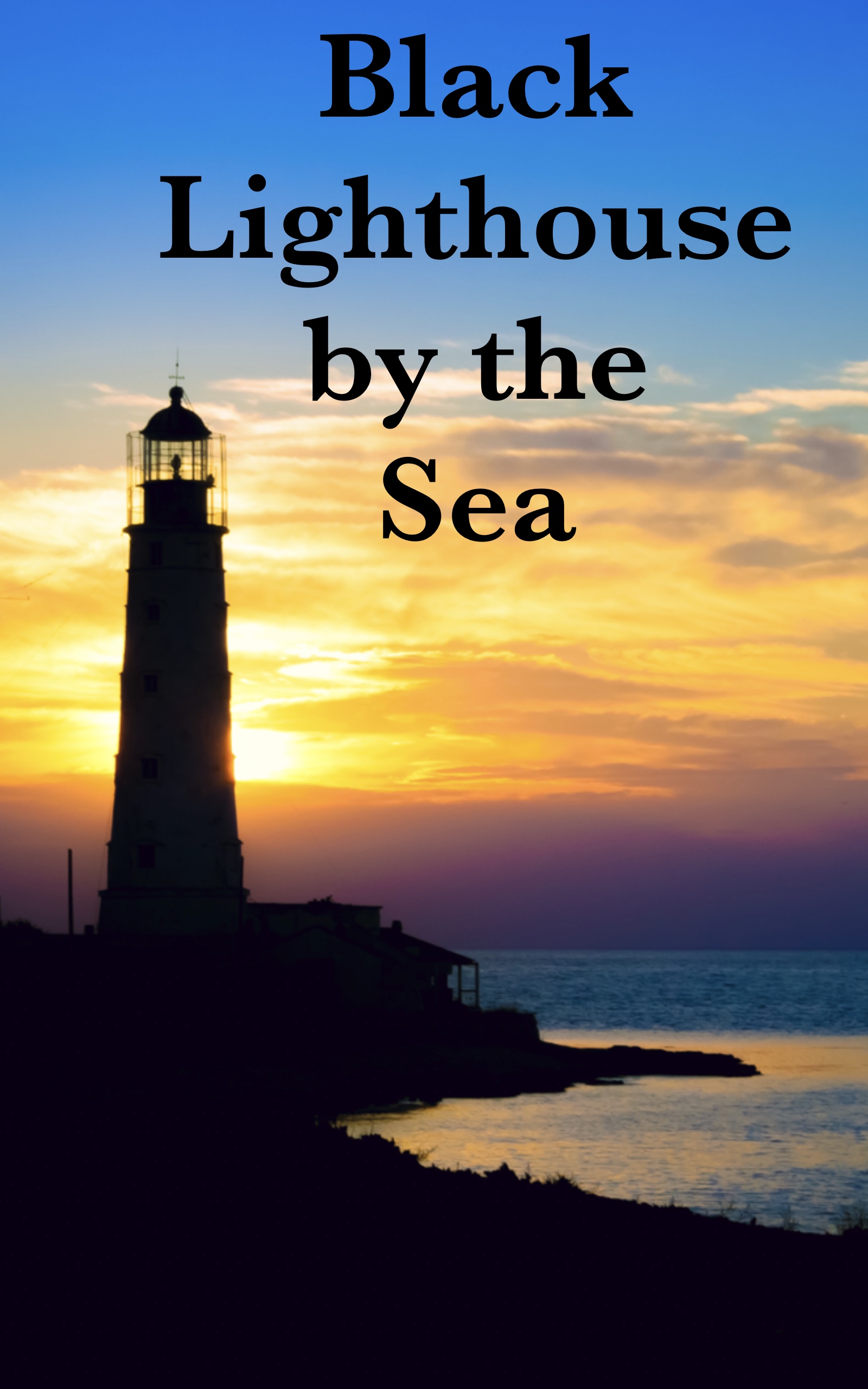
Surviving the wave and the riptide’s initial current was only the beginning of my problems. I had gone farther than I thought—the current still pushing me out. The beach where my mother was seemed an impossible distance away, and the black lighthouse looked like a toy figurine.
It wasn’t the distance away from the beach that had me locked in the jaws of fear—it was the dreaded pink balloons that my mother had warned me of. I was surrounded by them. There were hundreds, perhaps thousands, all around me. They moved in a lazy, sideways dance against the current, contracting their translucent bodies and then expanding to propel forward, tentacles streaming behind.
And then the pain came. The first sting was across my ankle. It was a slow burn at first, the pain building in intensity, becoming bright and searing. I cried out for help, but I was too far from the shore. My cries were lost in the cawing of the seagulls and masked by the ceaseless waves and wind. Nobody heard me.
But the jellyfish were all around me—a curtain of tentacles. The stings riddled my body from head to toe. The pain was immeasurable. I panicked. I thrashed and tried to swim away, only earning more and more stings. My head began to ache from the buildup of venom, my neck feeling tight. I must have tried swimming in every direction.
But it was pointless. I was doomed and outnumbered within a swarm of jellyfish, miles from the shore. My little body was on the cusp of exhaustion and defeat.
So, I did what any child would do: I cried.
“Why are you making that noise?” came a young girl’s voice. I turned in the water, and there in front of me was the most beautiful girl I had ever seen. But I was in considerable pain and stricken with terror. I couldn’t fully appreciate meeting her yet.
“The balloons,” I cried. “They're burning me.”
The girl looked surprised, as if just realizing that we were surrounded by these stinging balloons.
“Hmm,” she said, frowning at my predicament. She dove underwater, and I could have sworn that she had a large fin where her feet should have been. Maybe she was wearing one of those odd monofins.
Eventually, large and round figures began to emerge, circling about me in relative bliss. It took me a moment to recognize them for sea turtles.
The girl then popped her head back up, closer this time. Her hair was a mix of blonde and brown and red, adorned with seashells and some sort of netting to one side, keeping it held neat and tight. Her eyes were big and dark. I thought her pupils were the only part of her eyes until she swam closer, where I saw the faint rings of hazel outlining them. She was dark, yet her tone was still pallid. And in her hands, she held out some sort of seaweed, green and slimy.
“Here, boy,” she said. “Rub this on your body. It will take the pain away.”
I snatched it out of her hands, my head going below the surface in a mad attempt at grabbing for the antidote to my misery.
She grabbed me by the arm to steady me, watching me with concern. And I remember being surprised at how warm her hands were. In that moment, I thought that was the oddest thing about her. She had a skin color nobody else had, multiple hair colors, eyes larger than a deer’s—and she quite possibly had a fin under there somewhere—and yet I thought it was the warmth of her touch, in the cold and unforgiving waters of the sea, that was the strange part.
But as she held me, I went to work rubbing my body down with the foreign substance, it breaking apart as I covered all of my stings. Unprompted, she helped me with my back, too. The pain began to wane after a few applications, and then I clung to her arm, attempting to catch my breath.
She nodded at the sea turtles. “They’re making quick work of them.”
The large group of sea turtles were eating the jellyfish, clearing a circle around us. But I was torn from reality when the bottom half of her body came to the surface, mesmerized by her blue and green scales, a large fin where her feet should have been.
“Doesn’t that hurt the turtles?” I asked. I don’t know why I felt the need to avoid discussing the fact that she was a mermaid. Perhaps I thought it was rude. Perhaps I was afraid. Perhaps both.
“No,” she said. “It does not harm them.” And then she added, “Aren't you going to thank me with a kiss now?”
“A kiss?” I said. I had almost died, was speaking to a mermaid, and now I was tasked with discussing something that had never occurred to me.
“Well, yes, a kiss. If I save a human, I’m supposed to be rewarded with a kiss. It’s for good luck.” She saw the confusion in my eyes. “Does your kiss not bring good luck?”
“I don't know,” I said.
“Then kiss me,” she demanded. “I want to find out.”
“I'm not kissing you!” I said in a fit of newfound fright.
She gasped, swimming back.
I didn't mean to hurt her feelings. She was pretty—and quite kissable, I supposed. But I was just a boy.
“Why won’t you kiss me?” she said, annoyance in her voice. “Did I not save your life?”
I looked around and began to squirm in a panic as my body tired, head dipping below the waterline again. “I…I don't know,” I cried.
Glaring at me, she reached out to bring my head up to breathe, barely keeping me afloat. With the stings of the jellyfish a fast-fading nightmare, and, having caught my breath again, I was now facing the very real prospect that I might have to kiss a mermaid. I was out of the frying pan, and into the fire. And so, eventually, after taking multiple deep breathes…I summoned up the courage to swim away from her as fast as I could. I even called out for help once.
But she followed me, much to my dismay, diving beneath the waters and then resurfacing in front of me, barring my way. I'd swim the other way, and she would glide past me, propelled by her silent and otherworldly fin to cut me off again. And then we'd do it again, over and over.
Soon, the nature of children commandeered the awkward situation. I forgot what I was concerned about, and she forgot why she was angry. We laughed and swam together, lost in the thrill of the play, the line between human and merfolk vanishing.
Her smile was wonderful, her laughter rich and musical, and the energy she brought with her was almost palpable. When we would take breaks, we would hold onto each other, out of breath from the excitement, lost in studying one another. We may have been different, but she was a fast friend.
And so it was that a seed was sown in my mind, that would one day grow wild and out of control, forever haunting me, the sea endlessly steering me back to it.
A long loud foghorn sounded in the distance. I was drawn toward the source of the noise. It was the lighthouse. To my dismay, I discovered that the shore was lined with police and a rescue team, a boat just making it beyond the surf zone, signaling an end to our play.
“I’m going to get in big trouble,” I said. “I have to go.”
“Will you come back and play with me?” she asked, wary of the unexpected search party. “You don’t even need to kiss me.” Her face was one of fierce melancholy, eyes pleading.
“Do you have any more friends?” I said.
She shook her head.
“Do you have family?” I asked, hopeful.
“I’m alone in this world,” she said.
I wanted to hug her, then, but I wasn’t brave enough. “I’ll be back to play next summer,” I said.
“Promise? Do you promise to come back? To always be my friend?” she said, eyes dancing back and forth between mine.
“I promise,” I said.
She seemed to be content and flashed me a smile.
With that, she pushed me along faster than before. As soon as the rescue team spotted me, she let go. When I looked back for her, she was gone, and the absence of her warmth was maddening. Was that how she felt? Cold and lonely and without anyone caring enough to rescue her?
But having expectations as a child often end in disappointment. The next summer we went nowhere near a beach, given my brush with death. Could you blame my mother?
I did. I kicked and screamed and cried to no avail. But she was unyielding and refused to take me back to the beach with the black lighthouse. There was nothing I could do.
As the years went on, I continued attempting to persuade my mother, arguing with her about it until enough time had passed to where I didn’t remember why I had been so adamant about returning to the sea in the first place. The mermaid faded from my memory, like a dream one holds onto upon waking up, clutching at the details of it, eyes kept shut in a desperate attempt at returning to that other world—yearning for it, but never finding a way back in. Eventually, she was gone from my mind for good, and I was only left with the faint memory of a warm touch within the cold waters of the sea.
I didn’t return to the black lighthouse until I was seventeen.
“You cried and cried to come back here when you were younger,” my mother said to me, shaking her head as she laid out the beach towels with rocks atop their corners to weigh them down.
“Was I so bad?” I said, laughing as I saw the face she’d made, working to drive an umbrella deeper into the sand.
“Oh, yes,” she said. “You were always a good boy for me, I’ve always told you that, but it was like you were experiencing your terrible-twos all over again. You cried for weeks!”
I went out to the surf, letting the water lap about my feet, attempting to conjure any memories I’d had of my previous trip. A few things stood out. Drowning. Stinging. A warm touch…
“Mom? Was I stung by jellyfish when I was younger?”
“Oh, yes!” she said, turning to me, pulling out a strand of hair that was caught in her mouth by the wind. “You were stung terribly! You had stings and welts all over. The doctor says you were lucky to have survived so many stings. You were lucky to have survived being so far out, too. It was just dreadful.”
So it wasn’t all a dream after all. Some of it had to be real, right? There were no such things as mermaids. I knew that. It was this silly childhood fantasy I’d had. But maybe there really was a girl who lived nearby, who was out that day, wearing diving fins and playing a trick on me. Or perhaps I was overwhelmed and confused by the toxicity of the jellyfish venom. Dehydrated and half-drowned, barely alive, having some hallucination. That would probably explain some of the memories flooding back. But the warmth of her touch lingered, as though she’d just let go.
I made my way back out to the sea, to the bigger and bigger waves. At one point, just like déjà vu, my mother called out, “Don’t go so far, darling!” Though she wasn’t too concerned, me being seventeen, and her attention returned back to a book.
The urge I had to go deeper into the sea was overwhelming. I couldn’t explain it. I swam farther and farther out. I fought against the waves until I broke through the surf zone and was eventually swept out. I was pulled sideways along the shore, caught in the icy riptide’s current, and I did not resist it. Not this time. It was all too familiar to me. I had done this before. I also managed to maneuver around the coral reef I was expecting, easily done being a stronger swimmer now.
When the current finally stopped pulling me, I found myself at the place—at least I imagined I was at the place—where the jellyfish were the last time. The waters were clear, and instead of watching for jellyfish, I was on the lookout for sharks. The jellyfish weren’t so bad, though, not if I rubbed the seaweed-like substance on the stings that grew just below. But where had I learned that? From some fin-wearing girl? Wasn’t this where I had met her?
No. No, I was just fooling myself. What madness had driven me to go that far out again anyway? None of it was true. It was most likely all in my—
“You said you’d come back to me,” came a girl’s voice.
I turned around. Looking at me, with big eyes, was the most beautiful girl I had ever seen…again. This time I didn’t have any of the pain or dire urgency to stay alive, so I saw her clearly. She swam about me in a small circle, face scrunching up. “And you’ve changed,” she accused.
I looked around, and then back to the beach to where my mother was, and then back to the girl again. She was back. She was right there. She was real.
“I grew up,” I said, still beside myself.
“I see,” she said, pain etched across her face. “And why didn’t you come?”
“My mother didn’t bring me until now. I wanted to come back.”
“Are you not free to move about with your own two legs?” she asked.
“Well, yes…well, no…sort of,” I said in quick succession.
She blinked. “Either you can do a thing, or you cannot,” she said. “I do not believe you.”
“I was just a boy,” I said.
“You have not been just a boy for some time,” she said, a serious note in her voice.
“But I’m not a man yet either,” I countered.
“You still broke a promise.”
“I tried to come back,” I pleaded. “Why won’t you believe me?”
“Then why did you come back here?” she said. “To play? Like children?”
“Because you’re alone,” I said, wanting to make it right somehow.
She blinked and frowned a deep frown. “It’s been too long,” she said. “What if we cannot become friends again?”
“Don’t say that.”
“Do you know the impact of a broken promise?” she said. “I came here every day.”
The image of a lonely mermaid, waiting and watching the beach for me, came to mind.
“I’m sorry,” I said again, my muscles beginning to burn from swimming. “I shouldn’t have promised anything. Was there nobody else?”
“A promise was made to me,” she said, touching the area between her collarbones, “Why would I betray the boy I had promised friendship with?”
“If you want me to feel bad, you’ve made your point. And I’m sorry,” I said, wondering if merfolk looked at promises and friendship differently—as if it were some serious oath to take and uphold for a lifetime. “I really am sorry. If you don’t want to be friends, I understand. I can go back.”
“No!” she said, squeezing my arm. “Don’t leave. Please,” she said, eyes going wide with anxiety. Her grip on my arm radiated an extraordinary warmth, rekindling what had been lost to me for so long.
“Why on earth are you alone like this?” I said. It was unfair, and I was upset. Upset that I broke a promise and upset at her situation.
She looked away, still holding onto me.
“What happened?” I pressed. “What terrible circumstances—”
A finger pressed against my lips. She shook her head, frowning, and in that frown was a promise of its own. If I asked her anymore about it, she would leave. So, I let it go. Some things are best left alone. Why dwell on things beyond us when we have the present staring us in the face?
“I’ll stay with you then,” I said. “As long as I can.”
Her chin began to tremble. “Then stay with me for a year,” she said.
I laughed an uncomfortable laugh. “I couldn’t survive a year out here.”
“If there was a way for you to survive,” she said, hinting a smile. “What then? Would you stay?”
I thought about it. And I saw it in her eyes that she knew of a way. How it was possible, I did not know. But I found myself at a crossroads—the sort of crossroads that would define me for a lifetime. It would mean leaving my mother behind and heartbroken. But wasn’t that inevitable? Wouldn’t I be going off to college, leaving my childhood home behind anyway? Wasn’t that expected of me by society? And what did I want in life? What did I really want? What really mattered to me?
“Yes,” I said. “I will stay.”
She looked surprised.
“I’ve always wanted to return to the sea,” I said, and I saw that she saw the truth. “There was never any question. I had to come back. It’s like something has been calling me…waiting for me.”
“The call of the sea is powerful and mysterious,” she said, her expression softening, looking at my lips. “Perhaps you were too young to perform the request I made of you long ago. But what about now?” Her big, dark eyes trained on me, the pearl white of her teeth cresting her lips. Her hair was down this time, spreading and drifting about her shoulders, and, then, as she moved closer, her hair encompassing both of us. “Does the boy understand now?”
“Yes,” I said, taking her hands into mine. “The boy understands.”
She led me down into the depths of the sea, showing me another world beneath the waves, taking me to places I could only hope to have ever dreamed of seeing. She showed me lost things and hidden things…and things best kept a secret. We went farther and farther from the place we had first met, until my past life seemed a distant memory. I was taken away from everything I’d ever known, and yet I was unafraid because she was at my side.
Whatever had caused her severe loneliness, I never discovered. If she was an outcast, driven from her home, or, perhaps, the last of her kind, I do not know. But somewhere, in the dark and cold gloom, beyond the black lighthouse by the sea, the boy no longer, and man yet to be, found peace with a mermaid.
Anonymous. It simply lets the author know you appreciated the piece.